September 2026
The Top 5
Commercial Coffee Roasting Machines
in the UK
If you spend enough time looking at UK speciality roasters, five brand names usually come up again and again: Probat, Giesen, Loring, Toper and Diedrich. Each one takes a different approach to the same problem, turning green beans into coffee, and each suits a different stage of a roaster's growth. Here's a rundown of what makes each one tick, and how they stack up against each other.
1. Probat
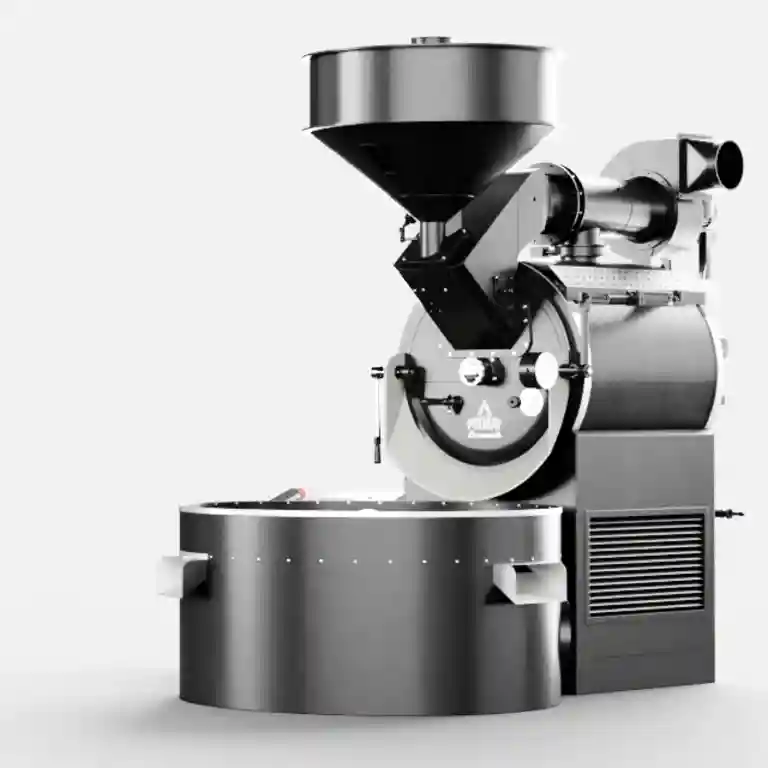
Image credit: Probat
Probat have been building roasters in Emmerich, Germany since 1868, and it's still the name most roasters mention first and you'll see most often. The P Series covers everything from the P01 sample roaster up to the P25 for larger production runs, all built around a traditional rotating drum with precise airflow and temperature control. The newer P Series machines run on a touchscreen system that lets you transfer roast profiles between machines, which matters if you're running more than one Probat in a roastery.
What roasters love about Probat machines is its consistency. The drum design and German engineering behind it mean two roasts of the same bean, weeks apart, come out close enough that customers won't notice the difference. It's definitely not the cheapest option and it's not the flashiest, but it's the machine most likely to still be running reliably in twenty years, and it also makes for a good show piece if you happen to have enough floor space to show it off to customers in and around your roastery or café.
2. Giesen
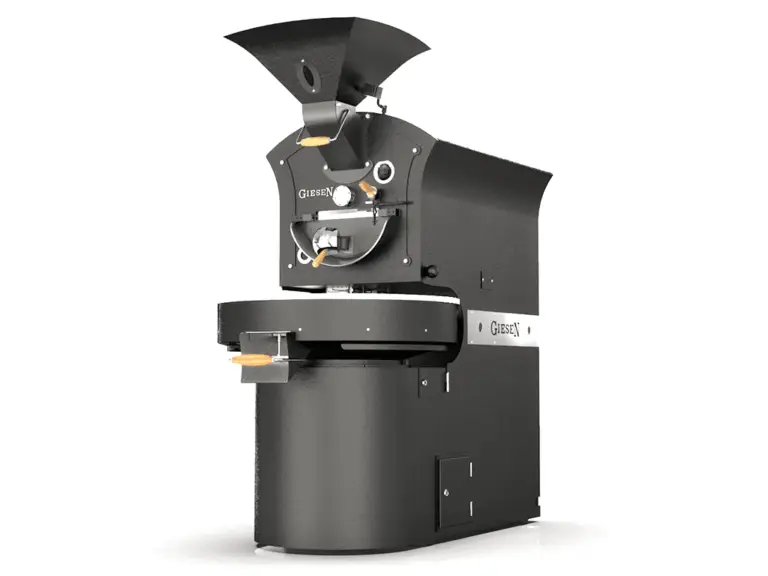
Image credit: Giesen
Giesen is a Dutch manufacturer that's become the roaster of choice for a huge slice of UK speciality roasting, partly on reputation (more world roasting champions have used a Giesen than any other machine) and partly on value. The W1 through W30 range covers sample roasting up to medium-large production, with the W6 sitting as the most popular commercial size for roasters moving past their first year in business.
Giesen roasters give full manual control over drum speed, airflow and burner output, alongside simultaneous roast-and-cool cycles that speed up throughput. The newer Giesen 6 and Giesen 15 add a modular, cloud-connected control system with AI-assisted roasting, though plenty of roasters are perfectly happy on the older analogue-feeling W-series controls. Handcrafted in the Netherlands, and UK distribution and servicing is well established, which matters more than people expect once something needs fixing.
3. Loring
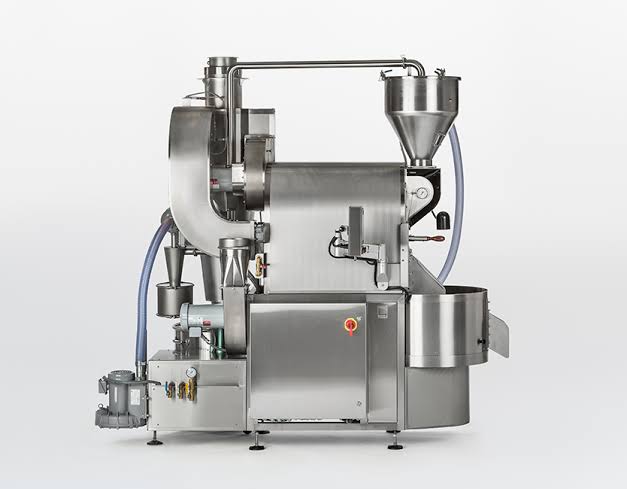
Image credit: Loring
Loring takes a genuinely different approach. Instead of a gas-heated drum, it uses a convection air roasting system with a single burner that both roasts the beans and incinerates the smoke, cutting fuel use by up to 80% compared with a conventional drum roaster with an afterburner. For a roastery worried about gas bills, extraction requirements or nearby neighbours smelling smoke, that's a serious selling point.
The S15 Falcon, Loring's smallest model, brings this technology down to a 15kg batch size aimed at growing artisan roasters rather than industrial operations. Everything is touchscreen controlled, with vacuum-elevator loading and an automated roast chamber door. It's the most expensive machine on this list by some margin, but for roasters chasing sustainability credentials or working in tighter urban units, the running cost savings and reduced smoke output can justify it.
4. Toper
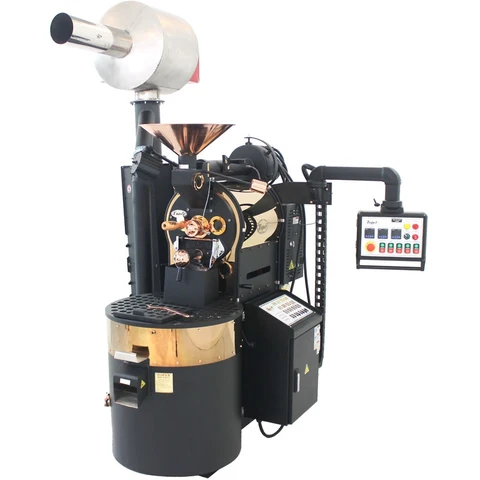
Image credit: Toper
Toper is a Turkish manufacturer that's become the standard entry point for UK roasters making the jump from home roasting to commercial production. The TKM-SX range runs from 1kg up to 20kg-plus, with the TKM-SX5 the most common size for a new roastery's first proper machine.
The appeal is straightforward: a genuinely commercial-grade roaster (double-walled drum, Cropster and Artisan compatibility, up to 21 recordable roast profiles) at a price well below Probat or Giesen. It won't have quite the same resale value or engineering pedigree, but for a roaster testing whether they can turn a hobby into a business, it's usually the sensible first purchase.
5. Diedrich
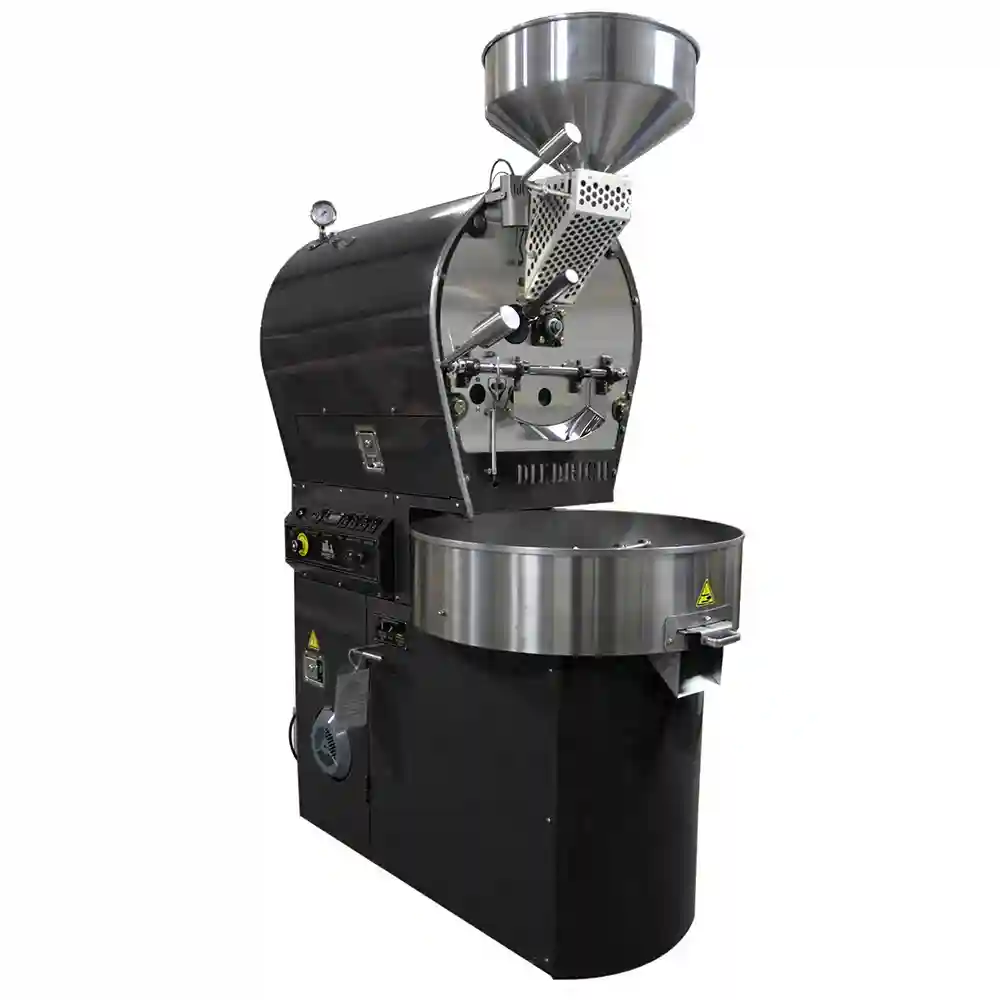
Image credit: Diedrich
Diedrich, based in the US, built its reputation on infrared burner technology, which heats beans more evenly than a conventional flame and gives roasters finer control over the early stages of a roast. The IR series covers small shop roasters through to larger production models, and it's a common sight in UK roasteries that started out on a smaller machine and stepped up.
Diedrich roasters have a reputation for being forgiving. The infrared heating and heavy drum construction make it harder to scorch a batch, which is useful for roasters still developing their palate and their profiles. It sits in a similar price bracket to Probat and Giesen, and the choice between the three often comes down to personal preference and which brand your local technician knows best.
Comparison at a glance
| Model | Capacity | Fuel type | Standout feature | Best suited for | Approx. price (£) | Roasters using |
|---|---|---|---|---|---|---|
| Probat P05 | 5kg (P Series runs 1–25kg) | Gas or electric | Web-based touchscreen with profile transfer between machines | Established roasteries wanting proven reliability | £35k–£45k | Square Mile Coffee Roasters (larger Probat G75), UCC Coffee UK & Ireland |
| Giesen W6A | 6kg (W1–W30 range) | Gas or electric | Simultaneous roast-and-cool cycle, strong resale value | Roasters past their first year, scaling up production | £35k–£45k | Altitude Coffee London, All Caps Coffee |
| Loring S15 Falcon | 15kg | Gas (smokeless single-burner) | Up to 80% fuel savings, minimal smoke output | Growing roasteries prioritising sustainability or urban sites | £70k+ | Cuppers Choice, Atkinsons Coffee Roasters, Horsham Coffee Roaster (S35) |
| Toper TKM-SX5 | 5kg (range up to 20kg+) | Gas, electric or LPG | Commercial-grade build at an accessible price point | First-time commercial roasters, small cafés | £15k–£20k | Coffeelink, White Rose Coffee Roasters, Wrexham Bean Co. |
| Diedrich IR-5 | 5kg (IR series scales up) | Gas (infrared) | Infrared burner gives even, forgiving heat distribution | Roasters developing their profiling skills | £35k–£45k | Gordon Street Coffee, Argyll Coffee Roasters, Big Dog Coffee |
Prices vary quite a bit depending on configuration, whether you go electric or gas, and what control system you add on, so treat these as a starting point for budgeting rather than a quote. Most UK distributors will talk through financing options too, which is worth asking about before ruling anything out on price alone.
Which one is right for you?
If you're roasting your first commercial batches and testing the market, the Toper is usually the machine most UK roasters start on. Once you've outgrown that and have a decent demand, Probat, Giesen and Diedrich all sit in a similar bracket, and the choice tends to come down to whether you have a local service technician who supports the brand and which one you got on best with at a demo. Loring is worth considering once fuel costs, smoke extraction or sustainability become real constraints rather than nice-to-haves.
I'm just here for the coffee, what does this mean for me?
If you're not in the market for a £30,000 roaster, and let's be honest, who isn't, what does this actually mean for you, the person looking for coffee beans and roasteries? The machine matters less than you'd think. The roaster behind the roast matters most.
None of the five machines listed above produce better or worse coffee. A skilled roaster can get excellent results from a Toper, and a careless one can ruin a batch on a Loring. What the machine actually tells you is something else: it's a decent signal for how established and serious an operation is. A roastery running a Probat or a Loring has usually been trading long enough, and doing enough volume, to justify that investment. A roastery on a 1kg or 3kg Toper is more likely to be smaller and newer, which isn't a downside, some of the best cups you'll drink come from someone roasting 20kg a week with total attention on every batch.
A few things that would be worth knowing as a buyer to get the most out of your beans:
- Roast date beats machine every time. Whatever the beans are roasted on, coffee tastes best in the two to four weeks after roasting and resting. Check the bag before you check anything about the equipment.
- Batch size affects consistency, not quality. Roasters running larger machines (Loring, bigger Probat and Giesen models) can hold a profile more precisely across bigger runs, which matters if you buy the same bag repeatedly and want it to taste the same each time. Smaller-batch roasters may have more variation bag to bag, but that variation is often part of the appeal if you enjoy trying single lots and micro-lots.
- "Small-batch" on a bag doesn't tell you much on its own. It sounds artisanal, but plenty of small operations roast on the exact machines listed here at 5kg or less. It's a description of the equipment, not necessarily the care taken.
- The switch to Loring is sometimes a sustainability story worth knowing about. If you care about a roaster's environmental footprint, a roastery that's upgraded to a Loring (or advertises smokeless roasting) has usually made a deliberate, fairly expensive choice to cut emissions, which is worth supporting if that matters to you.
If you want to know what a specific roaster in your area roasts on, it's usually mentioned on their "about" or "our roastery" page, and it's a good way to get a feel for how established they are before you commit to a subscription.
One more thing: the ventless outlier
There is another roasting machine manufacturer doing things a little differently. Cue, Bellwether Coffee. They produce a few sizes of machine but, more importantly, they're fully electric, ventless and automatic. Let's say that again: ventless. These are machines that can be installed inside a café without having to think about ventilation and the harmful gases that come from roasting coffee.
Their machines come as a tabletop roaster with a capacity of 1.5kg, up to a larger model at 20kg. It's not built for huge batches, but it does a decent job. The design is sleek and ultra-modern, like something designed in the iPhone age. I got to see one in action at the London Coffee Festival and sample some coffee roasted in it.
If you like content like this, stay tuned, and if you have any suggestions on things to cover, email hello@bean-here.com
Ready to explore the UK's speciality coffee scene? Browse all roasters and discover unique beans from across the country.
Browse all UK roasters →