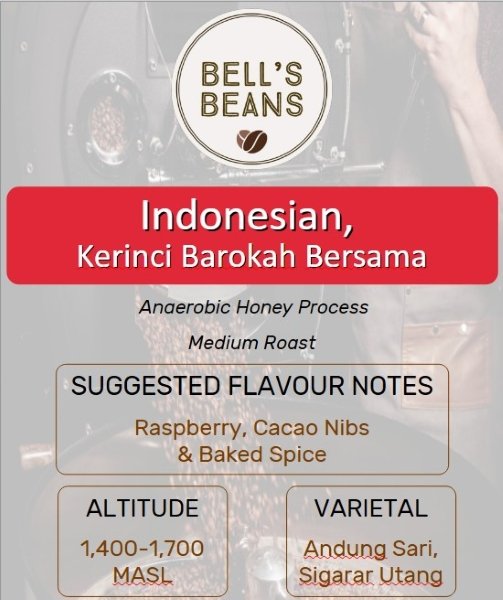
Indonesian Barokah Kerinci
Origin
Indonesia
Process
Anaerobic
Producer
/COOP/
Sizes
250g, 500g, 1kg, 125g
Description Indonesia Barokah kerinci Anaerobic Natural The producer cooperative responsible for this Anaerobic Honey lot are trying to add to the country’s rich tradition by diversifying the coop’s processing methods. This innovative lot applies anaerobic natural processing for a boozy, fruity cup profile. FARM/COOP/STATION: Koerintji Barokah Bersama VARIETAL: Andung Sari, Sigarar Utang PROCESSING: Anaerobic Honey ALTITUDE: 1,400 to 1,700 meters above sea level OWNER: 320 members of Koerintji Barokah Bersama Cooperative SUBREGION/TOWN: Gunung Tujuh REGION: Kerinci, Sumatra FARM SIZE: <2.5 hectares on average HARVEST MONTHS: Sumatra: April-June (main crop) & Nov-Jan; year-round (fly crop) About this coffee The 320 members of the Koerintji Barokah Bersama Cooperative live and farm on a plateau that sits at the foot of Mount Kerinci on the island of Sumatra. Mount Kerinci is one of the many volcanoes in the Pacific Ring of Fire, a 40,000-kilometer horseshoe-shaped series of 452 volcanoes that are part of an almost constant dance of eruptions and plate movements. Mount Kerinci’s historic eruptions have assured that the surrounding area is lush and verdant thanks to the deep supply of fertile volcanic soil. The cooperative is managed by Triyono, who leads members in processing and roasting their own coffee. They have a fully outfitted roasting facility, including a cupping lab, next to the dry mill. This is especially impressive considering the cooperative was founded in mid-2017! Cultivation Almost all farms on Sumatra are small. On average, farms are between 0.5 to 2.5 hectares. Coffee is usually the primary cash crop for farmers, but most also intercrop their trees alongside vegetables, potatoes and fruit. This intercropped produce will make up a substantial part of the family’s diet for the year. In addition to growing coffee as a cash crop, many smallholder farmers also work as hired laborers at the nearby tea plantations. Tea is also a huge crop in the area. The bigger tea plantations are often near coffee farms. When the coffee harvest is finished, coffee farmers will go there and pick tea leaves under contracted labor. There are more and more initiatives by farmers on Sumatra to organize themselves into cooperatives. In the past, farmers did not have much leverage to help themselves get better prices for their cherry or parchment. When they’re in cooperatives, they can share resources, organize training and negotiate better prices. Harvest & post-harve
from