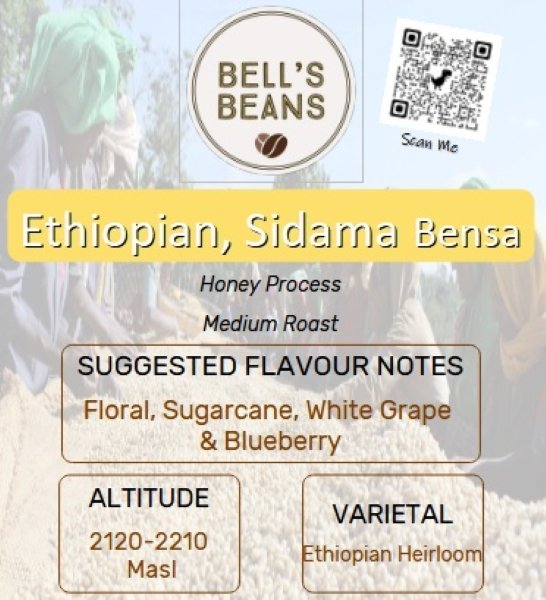
Ethiopian Sidama
Origin
Ethiopia
Process
Honey
Varietal
Ethiopian Heirloom, Heirloom
Producer
Daye Bensa
Sizes
250g, 500g, 1kg, 125g
Description About this Coffee Gatta Farm is the place where we run a dedicated specialty program. Daye Bensa’s Gatta Farm is at the heart of Shantawene Village, in Sidama Bensa, Ethiopia. It sits at an altitude of 2120 – 2210m in the midst of a natural forest. The site is surrounded by indigenous trees, which are older than 100 years, waterfalls, and rivers. One of the rivers separates Shantawene from Bombe and runs from the hills above Keramo. Gatta Farm has been named after a waterfall which crosses the farm. Gatta Farm was a natural forest before being discovered by the cofounder of Daye Bnesa, Mulugeta Dukamo, while managing the construction of Gafisse Station. They planted the first coffees in 2013, and established the drying station in 2017. The vegetation and forest surrounding the farm is useful as natural shade for the farm and the drying station. Plantation, harvesting and processing works are mainly done by the local residents. Also women are involved and are mainly assigned to quality control and processing, except for labor intensive tasks. By offering working opportunities and proper wage this is a real benefit for the local residents. Daye Bensa’s Gatta Farm isn’t only a farm, it consists of a drying station, a lodge and a training facility. During harvesting season, the drying station becomes active and also offers accommodations for employees or trainees until the training has ended. The training facility offers training in coffee processing for interested individuals. Coffee Grade: Fw Gr. 1 Varietal: Ethiopian Heirloom Processing: Honey Altitude: 2,120 – 2,210 Meters Above Sea Level Producer: Daye Bensa Region: Bensa, Sidama Grade 1 Grades in Ethiopia depend on visual inspection for defects and on cup quality. Grade 1 is considered the highest quality coffee. Grade 1 and 2 are considered specialty coffee, grades 3-9 are classified as commercial coffee. Grade 1 is free of cup faults and taints and has zero quakers. Coffee in Ethiopia While Ethiopia is famous as coffee’s birthplace, today it remains a specialty coffee industry darling for its incredible variety of flavours. While full traceability has been difficult in recent history, new regulations have made direct purchasing possible. The exceptional quality of Ethiopian coffee is due to a combination of factors. The genetic diversity of coffee varieties means that we find a diversity of flavour, even between (or within) farms with similar growing conditions and processing. In addition t
from