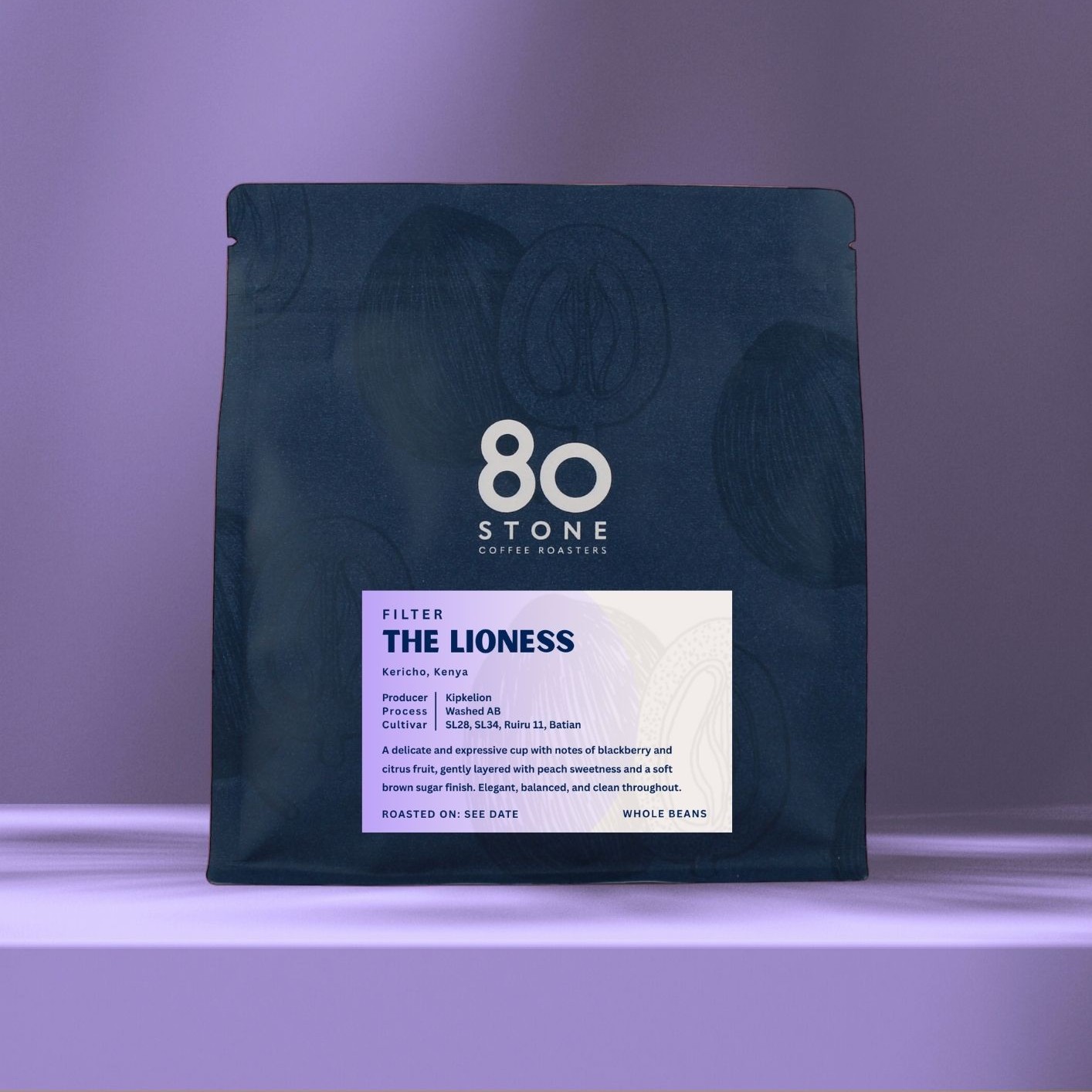
The Lioness
Origin
Kenya
Process
Washed
Varietal
SL28, SL34
Producer
Kipkelion
Sizes
250g, 1kg
THE LIONESS This is the kind of coffee we reach for when we want something bright, expressive, and easy to enjoy. It really shines through hand brewing methods like a V60 or flat-bottom dripper, where you can bring out its clarity and sweetness. We’ve found that giving it a slightly longer bloom helps the coffee open up, making it easier to extract those sweeter, more delicate notes. Let it sit a little longer than usual before continuing your pour. We keep the ratio consistent at 24g to 400g, around 1:17, and adjust the grind size to dial things in. Going a touch finer or coarser can make a big difference depending on how the coffee is behaving. Longer brew times seem to suit it well, helping develop a more rounded and balanced cup. If you like to experiment, this is a great coffee to play around with, as small tweaks can really bring out different sides of it. COUNTRY: Kenya LOCATION: Kericho PRODUCER: Kipkelion PROCESS: Washed AB CULTIVAR: SL28, SL34, Ruiru 11, Batian ALTITUDE: 1500 – 2200m HARVEST: October – December MORE ABOUT THE PRODUCER Kipkelion coffee hails from the highlands of Kenya’s Rift Valley—historically one of the country’s most economically important regions. Kipkelion itself lies in the southern part of the Rift Valley, just south of the Equator. This area is renowned for producing specialty-grade Arabica. The soils, formed by now-extinct volcanoes, combined with high altitude, create the conditions that Kenyan coffee is known for. While nearby Kericho County is more widely associated with high-quality tea production, Kipkelion has built a strong reputation for coffee. Coffee here is cultivated by small-scale farmers using sustainable and regenerative agricultural practices. Shade-grown coffee is often intercropped with other crops alongside dairy farming, and organic manure is used to reduce reliance on inorganic fertilisers. Rainfall is relatively consistent at around 1500–1800mm per year, typically across two rainy seasons, resulting in two harvest periods. Kipkelion’s farming community places a strong emphasis on agroecology, leadership development, and data-driven traceability. Farmers are organised into groups to support knowledge sharing and the adoption of improved practices. Initiatives such as water retention systems help mitigate the effects of climate change and improve long-term sustainability. Annual production averages around 6,000 tonnes. This coffee is predominantly produced using a fully washed process. Cherries are pi
from