Rarities
Origin
Colombia
Process
Anaerobic
Varietal
Caturra
Producer
John Rodriguez
Sizes
250g, 1kg, 125g
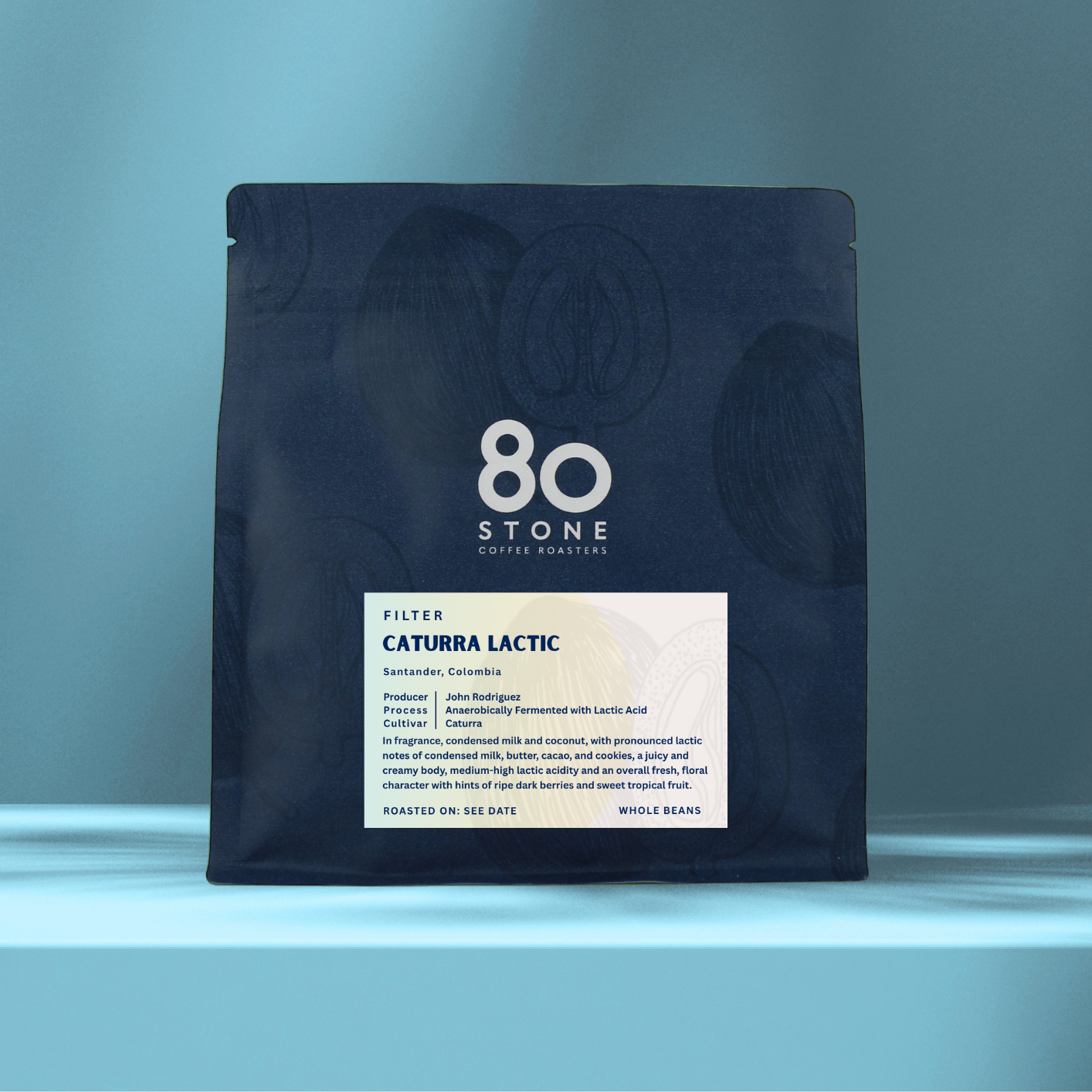
CATURRA LACTIC An exceptionally rare, unique and experimental coffee, unlike anything we have ever tasted. Best brewed slowly to highlight its delicate sweetness and intricate layers, we recommend pour-over or immersion methods that allow every note to unfold. As amazing as it tastes, we don’t suggest putting this one anywhere near your espresso machine! COUNTRY: Colombia LOCATION: Santander PRODUCER: John Rodriguez PROCESS: Anaerobically Fermented with Lactic Acid CULTIVAR: Caturra ALTITUDE: 1800 – 1910 masl HARVEST: May – December MORE ABOUT THE PRODUCER This coffee goes through a unique lactic fermentation process designed to develop sweeter, fruitier flavours in the cup. First, only perfectly ripe coffee cherries are picked by hand, then carefully washed and cleaned. The fruit is removed from the beans before they are placed into sealed containers with very little oxygen. During this stage, natural lactic bacteria along with fermented blackberry and melon cultures are added to help guide the fermentation and create more complex flavours. The coffee ferments slowly for around three to four days while the producers carefully monitor the process to ensure everything develops correctly. After fermentation, the coffee is dried naturally under the sun for about eight days until it reaches the ideal moisture level. Once dried, the coffee is ready to be milled, roasted, and brewed. The Caturra de Leche coffee is developed through a controlled co-fermentation process, in which two independent fermentations are carried out: a lactic fermentation and an alcoholic fermentation. Both processes are conducted separately and then later combined to form the final coffee profile. 1. Lactic fermentation The lactic fermentation is carried out using lactic acid bacteria previously isolated from the same coffee during earlier microbiological processes. This stage takes place under anaerobic conditions (absence of oxygen) to favour the activity of lactic bacteria. During this phase, milk is added, which contributes to the development of compounds that enhance the formation of lactic acid and aromatic precursors, resulting in creamier and more complex sensory profiles. 2. Alcoholic fermentation The alcoholic fermentation is carried out using yeasts of the species Saccharomyces cerevisiae , also previously isolated from the same coffee. This process takes place over approximately 3 days in plastic containers (drums), where the yeasts transform the sugars present in the coffee
from